Reversible doors – what are they? Advantages and disadvantages of reversible doors
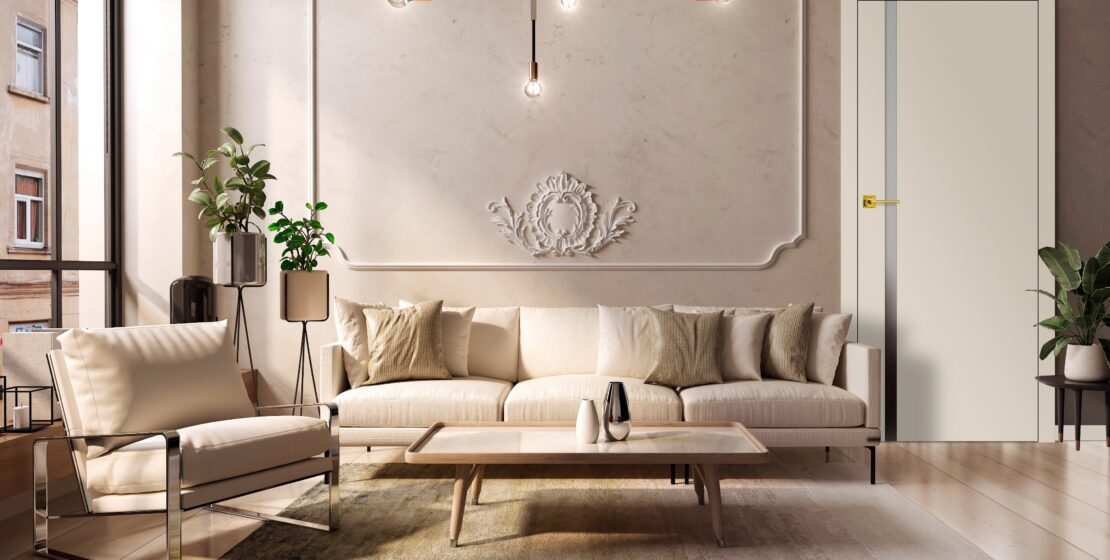
Reversible doors are a modern solution that combines aesthetics with functionality. Their use in bathrooms can be particularly beneficial, especially for small spaces. Although they require special hinge systems and can be more expensive than standard doors, their advantages make them increasingly popular among architects and interior designers.
What are reversible doors?
Reverse rebated doors, also known as reverse rebated or anti-rebated interior doors, are a modern solution for joinery. Their greatest advantage is that the door leaf is blended into the door frame, creating a smooth and uniform surface. This effect is particularly noticeable on adjacent doors, where traditional rebates can create visual gaps.

Advantages of reversible doors
- Aesthetics and consistency: Reversible doors provide a uniform surface on both the inside and outside, which is especially important for adjacent doors. As a result, the interior looks more cohesive and modern.
- Space saving: Although reversible doors open inward, which may seem like a paradox, they are actually ideal for small spaces, such as bathrooms. They avoid collisions between adjacent door leaves, which is especially useful in tight spaces.
- Versatility: They can match a variety of interior styles, from modern to classic. This makes them ideal for both new construction and renovated interiors.
- Functionality: They avoid collisions between adjacent door leaves, which is particularly useful in tight spaces, including corridors.
Disadvantages of reversible doors
- Space requirements: although reversible doors save space in the hallway, they require more space inside the room, which can restrict free movement. For small bathrooms, this can be an important factor to consider.
- Special hinge systems: require special hinge systems, which can increase installation costs. These specialized solutions are necessary to ensure smooth and quiet door opening.
- Limited availability of models: Due to the design, not every sash can be made reversible, especially those with decorative convex elements. This may limit the choice depending on individual needs.
- Higher costs: Reversible doors tend to be more expensive than standard flushless doors. However, this cost can be offset by the aesthetics and functionality they provide.

Typical applications for reversible doors
Reversible doors are ideal for different types of interiors, where both aesthetics and functionality are important. They are especially useful in small apartments, where hallways are narrow and cramped. In such cases, reversible doors allow free movement around the apartment, as they adjust the opening of the wings to the individual needs of the residents.
In minimalist interiors, reversible doors are an excellent choice, as they provide a consistent and clean look. Their minimalist design makes them ideal for loft, Scandinavian or eclectic styles. In addition, they are popular in commercial spaces, such as offices or restaurants, where aesthetics and professionalism of the interior are important.
Reversible doors are also ideal for narrow corridors where several doors need to be positioned close together. Because the leaves open inward, collisions between them are avoided, which is especially useful in tight spaces.

The use of reversible doors in the bathroom and children’s room
Reversible doors can be an ideal solution both in bathrooms and as children’s room doors, especially for small rooms. Their biggest advantage is that they open inward, making the best use of the available space. Unlike traditional doors that open outward, reversible doors do not take up valuable space in the hallway, which is especially important in cramped interiors.
In bathrooms with high humidity, reversible doors can be made of moisture-resistant materials, which is important for their durability. In addition, their minimalist design makes them ideally suited to modern interiors, where aesthetics and clean lines are particularly important.
Reversible doors are an ideal solution for a children’s room, especially when space is limited. With this solution, children have more space to play and move around. In addition, the concealed hinges and quiet closure provide comfort and silence, which is important in rooms where children sleep or study.
Closed reversible doors create a level plane with the wall, which adds a lot of harmony and aesthetics to the arrangement. This is especially important for bathrooms, where both functionality and visual coherence with the rest of the interior are important.